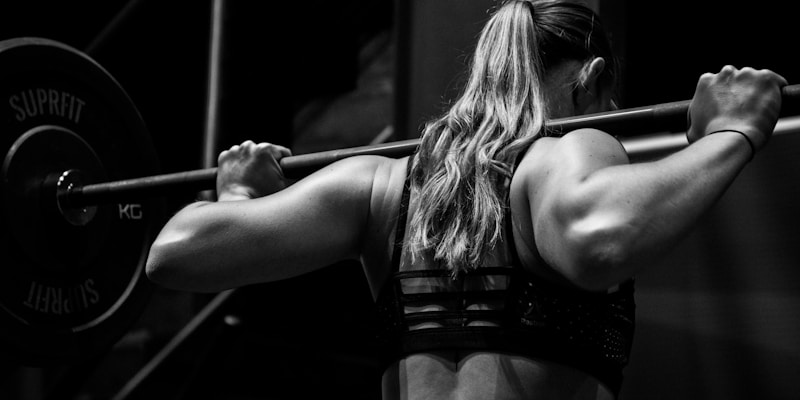
여자 선수들이 "월경 전에 퍼포먼스가 떨어진다"고 말하는 것은 이제 감이 아니다. 독일 하노버 의과대 연구팀이 호르몬 검증을 거친 6개 생리 주기 단계에서 신체 및 심리 지표를 추적해 이를 수치로 확인했다.
18명의 정상 배란 여자 선수를 대상으로 난포 후기, 배란기, 황체 전기·후기 등 6개 단계에서 하프 스쿼트 동적 최대 근력, 악력, 기분 상태 검사, 동기, 수면 질, 주관적 운동 강도를 측정했다.
결과, 하프 스쿼트 퍼포먼스는 난포 후기와 배란기에 최고, 황체 후기에 최저였다. 반면 악력은 황체 후기에 오히려 가장 높았다. 심리 지표에서는 황체 후기에 피로감과 우울 점수가 올라가고 활력이 줄었다. 동기, 수면 질,주관적 강도는 주기에 따른 차이가 없었다. 개인 수준에서는 하프 스쿼트 퍼포먼스가 우울 점수와 음의 상관을 보였다.
즉, 생리 주기에 따라 하체 파워는 변하지만 악력은 다른 패턴을 보이며, 퍼포먼스 저하가 심리적 우울감과 연결될 수 있다는 것이다.
실천적 제안은 명확하다. 선수와 코치진은 생리 주기 문해력을 갖춰야 하며, 주기 단계에 따라 훈련 부하를 조절하는 개별화 접근이 필요하다. 황체 후기에는 고강도 훈련을 줄이고 회복을 우선하는 전략이 합리적이다. 소수의 핵심 근력 및 웰빙 지표를 정기적으로 모니터링하면 개인의 패턴에 맞춘 부하 조절이 가능하다.
📖 *The effects of the menstrual cycle on physical and psychological parameters in female athletes* | 논문 원문 ※ 이 기사는 스포츠과학 논문을 바탕으로 작성되었습니다.
Female athletes who say their performance dips before their period are no longer just guessing. A team from Hannover Medical School tracked physical and psychological measures across six hormonally validated menstrual cycle phases and put numbers to the experience.
Eighteen eumenorrheic female athletes (ages 18-30) were assessed for dynamic maximal strength in the half squat, isometric handgrip strength, POMS mood subscales, motivation, sleep quality, and perceived exertment across six cycle phases.
Half-squat performance peaked in the late follicular phase and at ovulation, and was lowest in the late luteal phase. Surprisingly, handgrip strength reached its highest values during the late luteal phase. Psychologically, the late luteal phase showed increased fatigue and depression scores and reduced vigor. Motivation, sleep quality, and perceived exertion showed no phase effects. Individually, half-squat performance was negatively correlated with depression scores (r = -0.60, p = 0.009).
This means that lower-body power fluctuates with the cycle while grip strength follows a different pattern, and performance decline may be linked to psychological mood changes.
The practical recommendation is clear: athletes and support staff should develop menstrual cycle literacy and adopt an individually adaptive training approach. Reducing high-intensity training during the late luteal phase and prioritizing recovery is a rational strategy. Monitoring a small set of key strength and well-being markers regularly enables load adjustments tailored to each athlete's cycle pattern.
📖 *The effects of the menstrual cycle on physical and psychological parameters in female athletes (Repeated-measures study, 18 athletes)* | PubMed ※ This article is based on a sports science research paper.